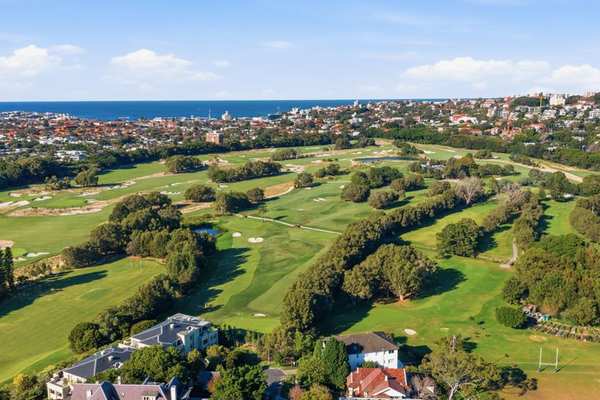
Two golf courses can share the same par and yardage yet ask for completely different shots. That is the clearest way to understand links vs parkland golf courses. A traditional links course is shaped by exposed, sandy ground, firm turf, wind and natural contours, while a parkland course usually moves through greener, more sheltered land with trees, rough, water and softer playing surfaces. The difference is not simply visual. It changes where you aim, how high you hit the ball and how much you trust the ground after it lands.
What Defines a Links Golf Course?
The word “links” has a specific historical meaning. Traditional links developed on coastal linksland, especially in Britain and Ireland, where sandy, well-draining ground sits close to the sea. The terrain is often rumpled rather than heavily shaped, with dunes, hollows and uneven lies forming much of the strategy.
Firm turf is central to the experience. Instead of expecting the ball to stop close to where it lands, golfers often plan for bounce and roll. A low approach can use a slope to feed toward a green, while a shot landing beside the flag may release through the putting surface. Fine grasses such as fescues are commonly associated with links conditions on suitable sandy soils.
Wind is another defining influence. With few large trees to block it, a links golf course can play very differently from one day to the next. The same hole may require a short iron with a following wind and a much longer club when played into it.
What Defines a Parkland Golf Course?
A parkland golf course is generally set in an inland, landscaped environment. Fairways may weave between mature trees, across rolling ground and around ponds, creeks, bunkers or other hazards. Compared with classic links, the visual lines are often more clearly framed by vegetation.
Parkland turf can vary widely by climate and maintenance, so “parkland” does not automatically mean soft. Still, many parkland courses reward more aerial golf. Golfers may need to carry bunkers, water or rough to reach a target, and approaches are often judged more by carry distance than by a long planned run along the ground.
Links vs Parkland Golf Courses: The Main Playing Differences
Terrain and visibility
Links terrain tends to feel open but unpredictable. A golfer may see a broad horizon while still facing awkward stances, humps, swales and partially hidden landing areas. Parkland holes are more often visually framed, with trees and defined corridors showing where the hole goes, although narrow lines can leave less room for error.
Turf and the ground game
Firmness is one of the biggest practical differences between these golf course types. On fast links turf, the ground is part of the shot. A player can land the ball short and let it chase forward, use a bank to redirect it or putt from well off the green. On many parkland courses, thicker rough and softer approaches reduce those options, encouraging a higher shot that carries closer to its final destination. For more context, see golf course architecture basics.
Wind and shot shape
Wind can influence any course, but exposed links make it a constant strategic factor. Golfers often flight the ball lower, take extra club and swing more smoothly into a headwind. Crosswinds also change ideal angles from the tee.
Parkland trees can shelter some holes, but they also punish misses by blocking the direct route to the green.
Hazards and punishment
Links courses are famous for deep bunkers, including small pot bunkers that can force a golfer to play backward or sideways. Native rough, dunes and uneven ground also punish poor angles. Water is usually less central to classic links strategy than on many modern parkland layouts.
Parkland hazards often create clearer carry decisions. A pond fronting a green, a creek crossing the fairway or a bunker guarding one side can turn club selection into a direct risk-versus-reward choice. Trees and heavy rough can also make accuracy from the tee especially important.
How Strategy Changes From One Style to the Other
Imagine a 150-yard approach. On a receptive parkland green, the straightforward play may be a full iron designed to land near the target and stop quickly. Put the same distance on a firm links course with a strong following wind and a tightly mown entrance, and the smarter shot might be a lower club landed 20 or 30 yards short so the ball releases forward.
That example shows why golfers should avoid using one fixed yardage system on every course. On links, study wind direction, landing slopes and the safest path along the ground. On parkland layouts, identify required carries, tree lines and the side of the fairway that gives the cleanest angle into the green. A useful companion topic here is how to choose the right club in the wind.
Neither course design style is automatically harder. Difficulty depends on the individual layout, weather, setup, rough, green speed, tees and a golfer’s strengths. A high-ball hitter may enjoy carrying parkland hazards, while a creative player with good trajectory control may adapt quickly to firm links conditions.
Can a Course Be Links-Like Without Being a True Links?
Yes. A course can have fescue, few trees, firm turf and strong wind without being a traditional links course. Inland layouts may borrow links-inspired features, but geography and underlying landscape still matter. Calling such a course “links-style” or “links-like” is often more accurate than treating every open, treeless layout as true links.
Parkland is also a descriptive style rather than a strict Rules of Golf category, and course styles can overlap.
FAQ
What is the biggest difference between links and parkland golf courses?
The biggest difference is how the landscape influences play. Traditional links emphasize exposed wind, sandy ground, firm turf and ground-running shots, while parkland courses more often use trees, rough, water and defined inland corridors that encourage greater use of aerial carries.
Are links courses always beside the sea?
Traditional links courses are associated with coastal linksland. Inland courses can imitate links characteristics, but they are generally better described as links-style or links-like rather than true links.
Are parkland golf courses easier than links courses?
No. Either style can be easy or demanding. Links may test wind judgment and bounce control, while parkland courses may demand precise drives, forced carries and accurate approaches into well-defended greens.
What shots are most useful on a links course?
Low-flighted shots, bump-and-runs, controlled punch shots and approaches that use slopes and firm turf are especially useful. The best option depends on wind, lie and ground conditions, so adaptability matters more than relying on one signature shot.
Which Style Offers the Better Experience?
Links and parkland golf are best viewed as different conversations with the landscape. Links asks you to read wind, contour, bounce and distance together. Parkland more often asks you to choose a precise line, carry visible trouble and position the ball within a framed corridor. Learning both styles makes course architecture easier to appreciate and can make a golfer more versatile. For readers exploring that wider subject, different types of golf courses is another natural next step.