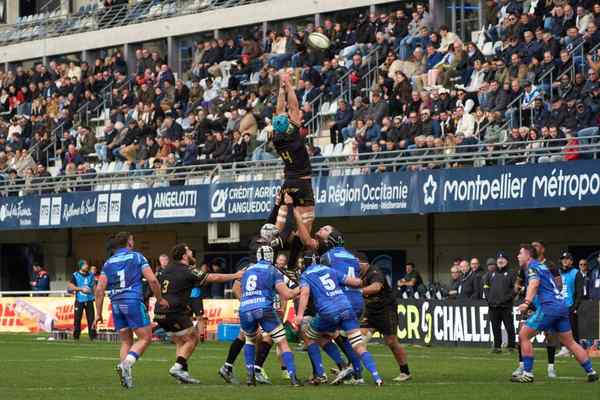
The Rugby World Cup begins with pools and ends with one match for the Webb Ellis Cup. Between those points, table points, bonus points and tiebreakers decide who survives, before knockout matches settle the title. The men’s Rugby World Cup format is changing for Australia 2027, so an explanation based solely on France 2023 misses a major development: the new round of 16.
The Rugby World Cup Format at a Glance
The 2027 men’s tournament has 24 national teams divided into six pools of four. Every side plays its three pool opponents once. The top two teams in each pool advance automatically, joined by the four strongest third-placed teams. Those 16 qualifiers progress through the round of 16, quarterfinals and semifinals, with the winners meeting in the world cup final.
Australia 2027 runs from 1 October to 13 November and features 52 matches: 36 pool games, eight round-of-16 fixtures, four quarterfinals, two semifinals, a bronze playoff and the final. The Women’s Rugby World Cup has separate competition arrangements.
How Do the World Cup Pools Work?
The six groups are labelled Pools A to F. With four teams in each, every group contains six matches, and each country has three opportunities to accumulate competition points. Fixtures are played once, without home-and-away return legs. The pre-tournament draw uses ranking-based bands to distribute teams across the groups.
Finishing first rather than second affects a team’s next opponent. Third place also matters: it can offer a route to the knockouts, although two of the six third-placed sides will miss out. A fourth-place finish means elimination.
How Are Pool Standings Calculated?
Competition points differ from points scored on the field. Under the World Cup pool system, a win earns four competition points, a draw earns two and a defeat earns none. A team receives an additional point for scoring four or more tries, while a losing team receives one bonus point if the margin is seven points or fewer.
Consider a team winning 30–27 with four tries. It collects five table points: four for victory and one for its tries. Its opponent earns a losing bonus point, potentially two bonus points if it also scores four tries. This makes a late try or conversion significant even in a losing effort. For more on the numbers on the scoreboard, see rugby union scoring rules.
How Do Rugby World Cup Tiebreakers Work?
Two teams can finish on the same competition-point total yet occupy different positions. Within a pool, the established ranking criteria start with the result of the match between the tied teams. If necessary, the next measures include overall points difference, tries difference, total points scored and total tries scored. An official World Rugby ranking is the final fallback.
Comparing third-placed teams from different pools requires another method because those countries might never have met. For 2027, the four best third-placed teams are selected by competition points first, followed by points difference, points scored and tries scored. A specified World Rugby ranking breaks a tie that remains unresolved.
A Practical Third-Place Example
Suppose the third-placed sides in Pools A and B both collect six competition points. Pool A’s team has a points difference of plus 8 and Pool B’s has minus 4. Pool A ranks higher in the cross-pool comparison, even if Pool B scored more tries. A single late score elsewhere could therefore change which country qualifies.
When following the final pool weekend, check the full standings rather than just wins and losses. Bonus points and scoring margins can determine the last knockout places.
What Happens in the Rugby Knockout Stage?
The 2027 rugby knockout stage starts with eight round-of-16 matches. Eight winners advance to four quarterfinals, followed by two semifinals. The semifinal winners reach the final, while the losers meet in the bronze playoff for third place. A country must win each knockout match to stay in contention for the trophy.
Opponents are allocated through a predetermined bracket, not a fresh draw after every round. Winners of Pools A, B, C and D meet qualifying third-placed teams in the round of 16. Winners of Pools E and F face runners-up. Some other runners-up meet each other. The exact third-place matchups depend on which four pools supply those qualifiers.
Winning a pool does not guarantee an easy route to the title. One winner may meet a third-placed side first but face another pool winner in the quarterfinals. Another might meet two runners-up. The official bracket shows the possible paths more reliably than simply ranking the remaining teams.
What If a Knockout Match Is Tied?
A knockout match needs a winner. Under the established Rugby World Cup procedure, a draw after regulation time leads to two 10-minute extra-time periods. If the scores remain level, a maximum 10-minute sudden-death period follows, with the first score winning. If necessary, a place-kicking competition decides the match. The tournament regulations specify the precise procedure.
Unlike pool matches, knockouts do not award bonus table points. Progress depends entirely on winning.
How Is the 2027 Format Different From 2023?
France 2023 had 20 teams in four pools of five, with four pool matches per side. Only each pool’s top two advanced, going straight to the quarterfinals. Australia 2027 increases the field to 24, reduces the pool schedule to three games per team and adds a round of 16.
That creates more fixtures overall, up from 48 to 52, without adding games for a finalist. In 2023, a finalist played four pool matches and three knockouts. In 2027, the route is three pool games and four knockouts: still seven matches. The overall tournament is scheduled for 43 days rather than 50.
The expansion gives additional nations a chance to compete, while third place is now worth fighting for. For a historical comparison, explore past Rugby World Cup winners and the formats they navigated.
Frequently Asked Questions
How many teams qualify from each pool?
In 2027, the top two in each of six pools qualify automatically. Four more places go to the best third-placed teams, producing 16 knockout participants.
How many games does a Rugby World Cup team play?
Every 2027 entrant is scheduled for three pool games. A finalist plays seven matches in total, as does a losing semifinalist that goes on to contest the bronze playoff.
Do bonus points count in the knockout stage?
No. Bonus points help determine pool standings and qualification. Once the knockout stage begins, only the result of the match decides which team advances.
What is the bronze playoff?
It is the third-place match between the losing semifinalists. The separate final determines the world champion and winner of the Webb Ellis Cup.
The Road to the Webb Ellis Cup
The Rugby World Cup format combines a points-driven pool stage with a win-or-go-home knockout bracket. For 2027, the crucial differences are six four-team pools, the extra qualifying places for third-placed sides and a new round of 16. Follow the standings, tiebreakers and official bracket together, and the route to the final becomes straightforward.