The 1500 meters rewards more than raw speed. In an 800-meter race, athletes often commit early to a demanding pace. Over 1500 meters, you still need speed, but the bigger challenge is deciding when to use it. A runner who feels comfortable halfway through can lose ground by getting trapped on the inside. Another may lead confidently, then find that repeated surges have drained the legs before the bell.
A useful 1500 meter race strategy combines a realistic pace plan with flexible positioning. Cover the shortest sensible route, respond to decisive moves without panicking, and reach the final lap with options. The goal is not simply to run faster at the end; it is to avoid wasting energy beforehand.
Understand the Shape of a 1500m Race
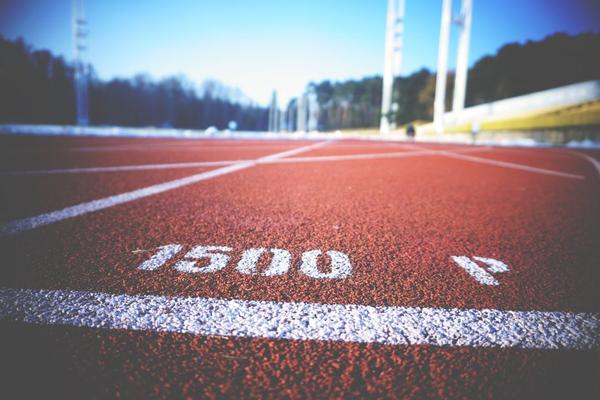
On a standard outdoor 400-meter track, the race covers three and three-quarter laps. The starting line sits 300 meters before the finish line, so the opening segment is 300 meters, followed by three full laps. This matters when checking splits: the first clock reading at the finish is not a full 400-meter lap.
The metric mile strategy also depends on the race. In a time-focused meeting, a steady rhythm may work. In a championship or crowded school race, competitors can begin cautiously and surge unexpectedly. Prepare for both instead of assuming the field will follow your preferred pace.
Win Space, Not the First 100 Meters
Start Positively Without Sprinting
From the standing start, accelerate enough to establish a safe place, then relax into your intended effort. Chasing the lead can turn the opening 150 meters into an expensive sprint. Hanging too far back may force you to weave around runners later. A position near the front half of your ability group often balances these risks, although the right spot depends on the field and your strengths.
Know the Cost of the Inside Line
Running near lane one usually saves distance, but hugging the rail can leave you boxed in when the pace accelerates. Staying slightly outside another runner can offer an escape route, although running wide around bends adds distance. Choose a position that gives you room to react rather than claiming the rail at any price.
Build a Pacing Plan You Can Actually Use
Good 1500m pacing starts with a target based on recent training and races. Divide the time into manageable segments, then practice recognizing that effort without constantly checking a watch. An overly fast opening 300 meters should not dictate the rest of your race.
A Five-Minute Race Example
Suppose your goal is 5:00. Even pace works out to 80 seconds per 400 meters, or 60 seconds for the opening 300. Useful cumulative checkpoints are approximately 1:00 at 300 meters, 2:20 at 700 meters, 3:40 at 1100 meters, and 5:00 at the finish.
These numbers are a reference, not an order to ignore competitors. If the field slows, decide whether advancing is worth the effort. If the leaders go much faster than your fitness supports, resist a pace that could ruin your final lap. Practicing race-pace repetitions helps you recognize sustainable effort.
Handle the Middle Laps Without Wasting Energy
Between the early positioning battle and the finishing kick, stay alert without constantly changing speed. Watch for a runner ahead drifting backward, a gap opening before the bend, or the leaders beginning a sustained acceleration. Closing a small gap promptly can require less energy than bridging a large one later.
Not every surge demands an immediate response. Consider whether the move comes from a direct competitor, whether the pace is sustainable, and whether you can regain contact gradually. Matching every brief burst may leave you exhausted despite an apparently reasonable average pace.
Pass With a Purpose
When overtaking, look for a clear path and move decisively. Spending half a lap beside another runner adds distance without gaining position. Do not cut across another athlete’s stride. Effective middle distance tactics protect rhythm as well as running room.
Make the Bell Lap Count
With 400 meters remaining, assess your remaining energy and where you can accelerate safely. If boxed in, finding open space may matter more than sprinting immediately. If the leaders are already lifting the pace, waiting too long can make them impossible to catch.
Time Your Finishing Kick
There is no universal launch point. A speed-oriented runner might be strongest over the final 150 to 200 meters. An endurance-oriented runner may benefit from a sustained increase beginning 300 to 400 meters from home. Your finishing kick should reflect your strengths and the race situation.
As you accelerate, maintain posture and cadence rather than reaching forward with each stride. Build speed smoothly. In the home straight, commit to the finish instead of looking backward.
Rehearse Decisions, Not Just Lap Times
Intervals develop fitness, but you also need practice making choices under pressure. In selected workouts, ask a training partner to change pace during a repetition. Practice closing a modest gap smoothly, settling again, then accelerating toward the end. Match these sessions to your training level and recovery needs.
Try some repetitions behind a partner and others from the front. Notice how overtaking and running through bends affect effort. A guide to 800 meter race tactics helps explain speed versus patience, while middle distance interval workouts can strengthen race rhythm.
Common Tactical Mistakes
Starting far above goal pace, repeatedly passing wide, and chasing every attack can undo a promising performance. So can treating the bell as an instruction to sprint all-out regardless of your condition. The final lap is long enough for a reckless burst to become a painful slowdown.
After racing, review your positions at 300, 700, and 1100 meters and when pace changes occurred. Compare your plan with what happened. Work on finishing speed development when needed, but remember that smarter decisions can also improve your results.
Frequently Asked Questions
Should I lead a 1500m race from the start?
Lead if it suits your strengths and keeps the pace manageable. Sitting just behind the leaders may save energy, provided you have room to move when needed.
Is even pacing always best for the 1500 meters?
Even pacing is a useful starting point for a personal-best attempt, but tactical races rarely unfold evenly. Respond to meaningful changes without wasting energy on every surge.
When should I start my finishing kick?
That depends on your speed endurance and competition. Rehearse different acceleration points to learn whether a longer drive or shorter sprint suits you.
How do I avoid being boxed in?
Stay aware of nearby runners, avoid settling at the rail without an exit, and seek open space before an expected acceleration. Never push or obstruct another athlete.
Finish With a Plan and the Freedom to Adapt
A strong 1500m performance grows from small decisions across the race. Start controlled, monitor positioning, choose pace changes carefully, and protect your ability to finish strongly. Practice those choices alongside your fitness work so you can adjust when the race refuses to follow the script.